

For a few weeks each year, the streets of Monash undergo a familiar transformation.
Old couches appear on nature strips. Mattresses lean against fences. Broken furniture, timber, appliances and household odds and ends are carefully carried from garages and backyards and stacked outside homes, waiting for Council’s annual hard waste collection. For many residents, it is simply the annual clean-out. For others, however, it has become something else entirely: an opportunity to scour the streets for furniture, appliances and other discarded goods worth salvaging.
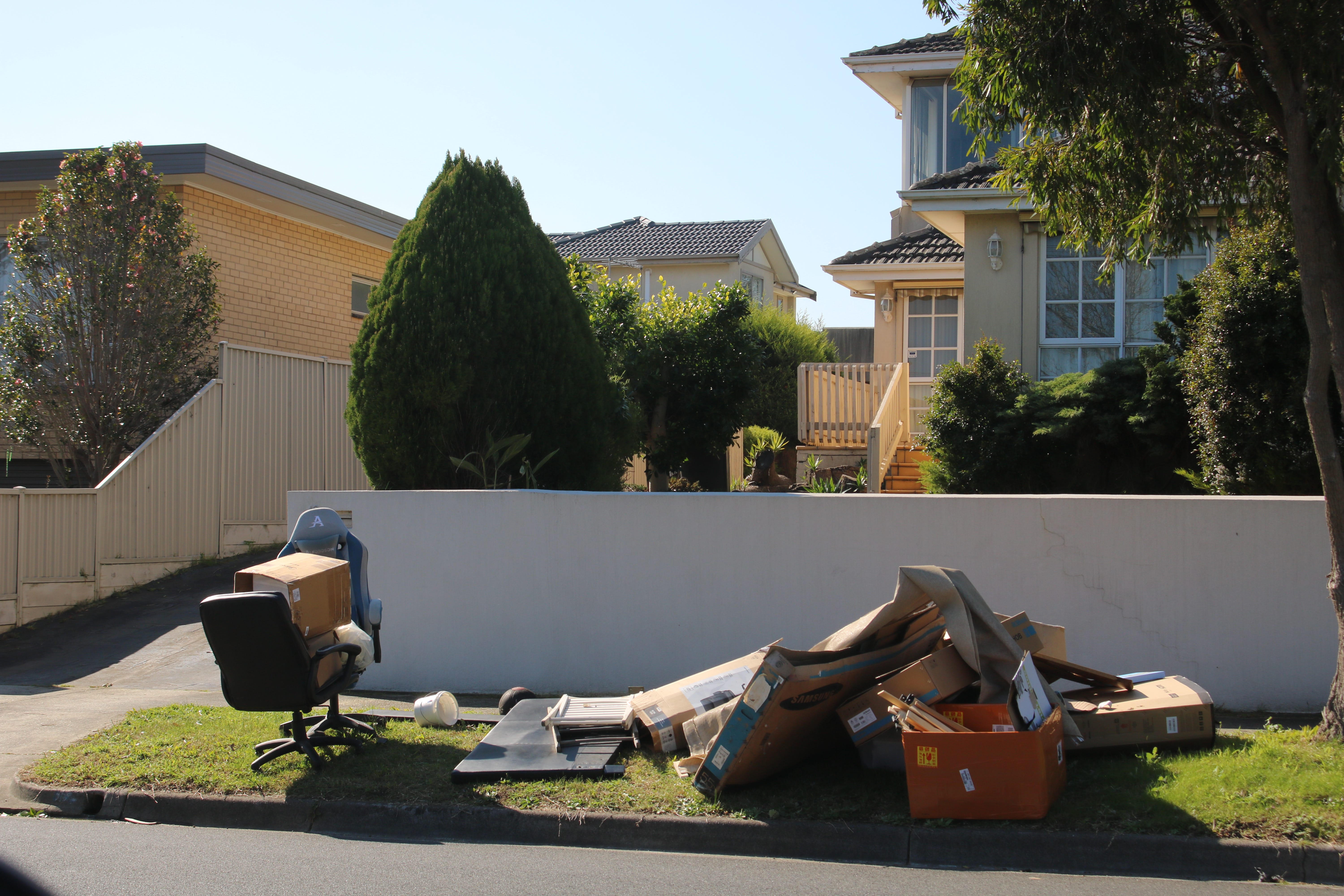
Photo: Izy Rajapakshe | Monash Herald
There is nothing inherently wrong with that. Reusing something destined for disposal can give an unwanted item another life and keep usable goods out of landfill.
The problem, residents say, is what is sometimes left behind.
The Monash Herald has spoken to residents frustrated by people pulling apart carefully arranged hard waste piles while searching for items, only to leave rubbish scattered across nature strips and footpaths.
“We don’t care if people want to take the rubbish, as long as they don’t mess up our nature strip,” one resident told the Monash Herald.
It is a frustration that exposes an often-overlooked consequence of Monash’s traditional collection model. When entire neighbourhoods put their hard waste out at roughly the same time, streets can effectively become an unofficial second-hand marketplace for several days.
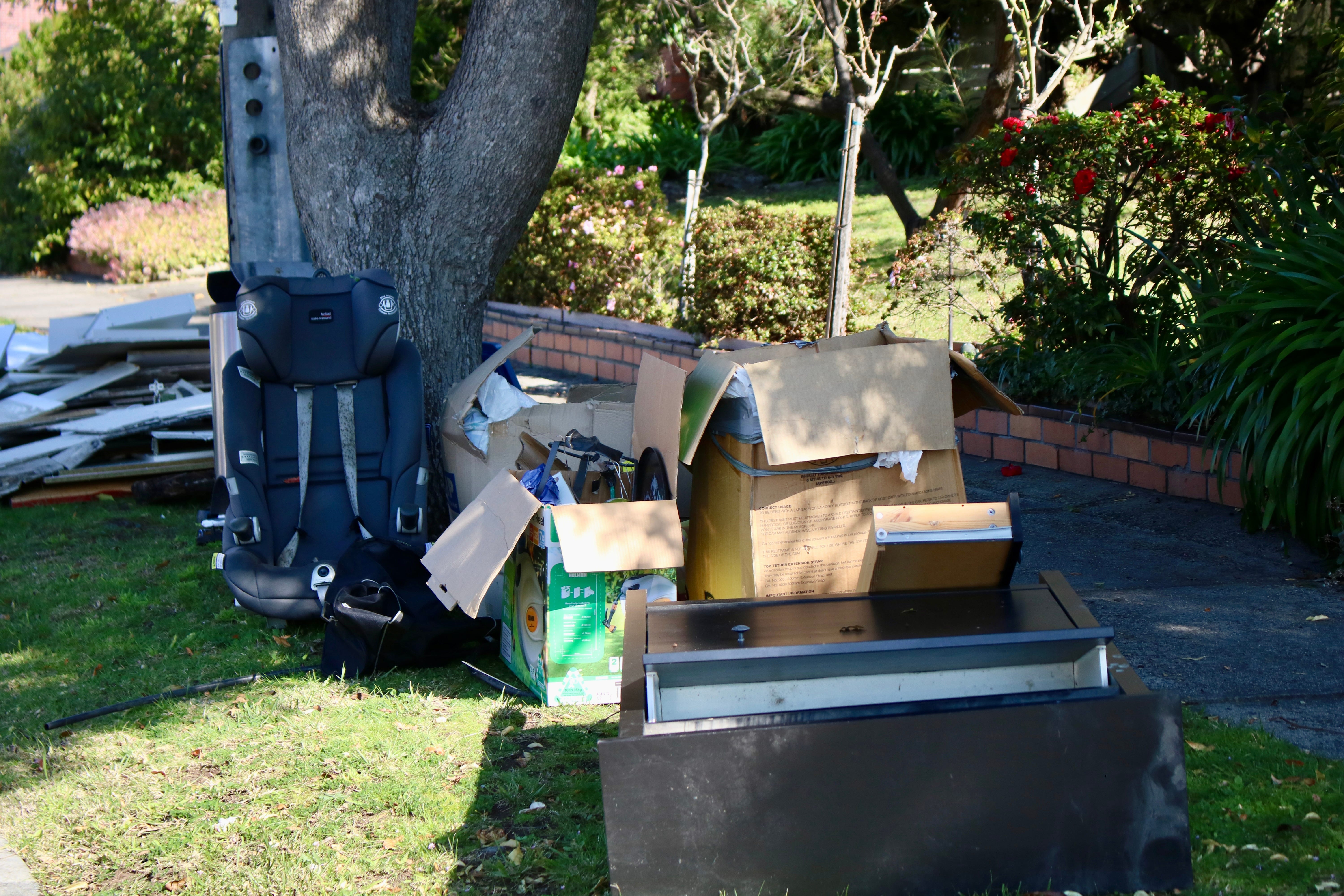
Photo: Izy Rajapakshe | Monash Herald
A neatly stacked pile can quickly be pulled apart as people search through it, leaving smaller items strewn across the grass or pushed towards the roadway. What began as an orderly collection can become an eyesore and the resident whose property it sits outside is left looking responsible for the mess.
Council currently instructs residents to put accepted items out no earlier than two days before collection and limits the annual collection to four cubic metres. The 2026 collection is running across Monash from 13 July to 4 September, with different areas allocated collection dates during the eight-week period.
The annual system is not new. Council records show that Monash was already operating its once-a-year “blanket” hard waste collection when the service underwent a major review in 2017 and 2018. More than 105,000 residents and ratepayers were contacted during that consultation and, of the 30,900 responses received, 77 per cent supported retaining the annual collection, supplemented by a user-pays at-call service. Council subsequently voted in January 2018 to retain the annual model.
But after years of the familiar winter clean-out, that system is now approaching its end.
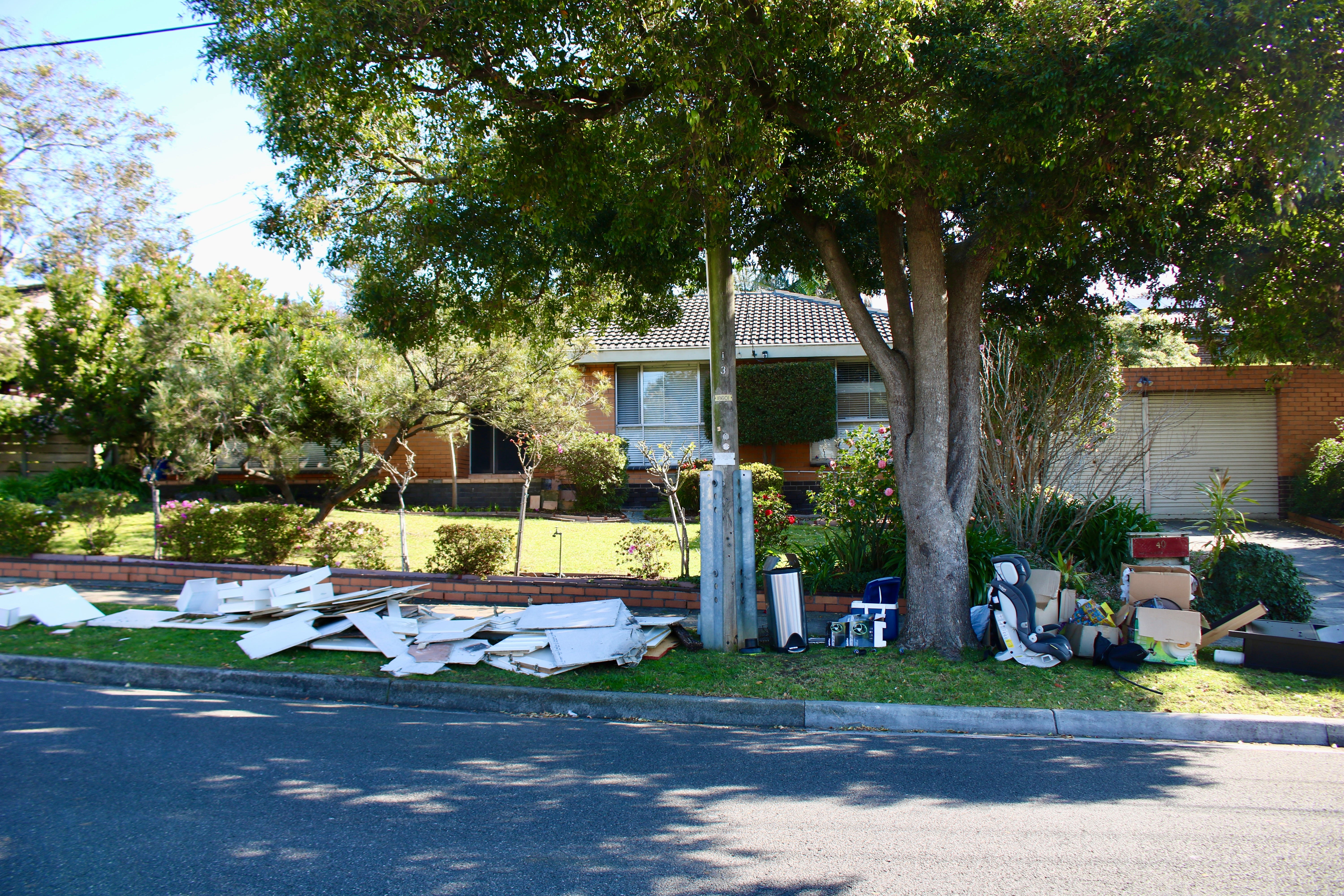
Photo: Izy Rajapakshe | Monash Herald
From 2027, Monash will abandon the municipality-wide annual collection timetable and move to a flexible booked service, allowing households to arrange up to two hard waste collections each year at a time that suits them. The decision followed another major community consultation in late 2025, with more than 2,600 people participating. This time, 55 per cent preferred the booked model.
Council says the change is intended to provide greater flexibility, particularly for renters, people moving house and households without enough space to store unwanted items until the annual collection arrives. Bookings will be available digitally and by phone.
Importantly, Council has acknowledged concerns about what the change could mean for neighbourhood amenity. During consultation, supporters of the existing annual system raised fears that booked collections could result in rubbish sitting outside homes or being dumped illegally. Council says it intends to introduce clear rules around when items can be placed outside, collection timeframes and enforcement.
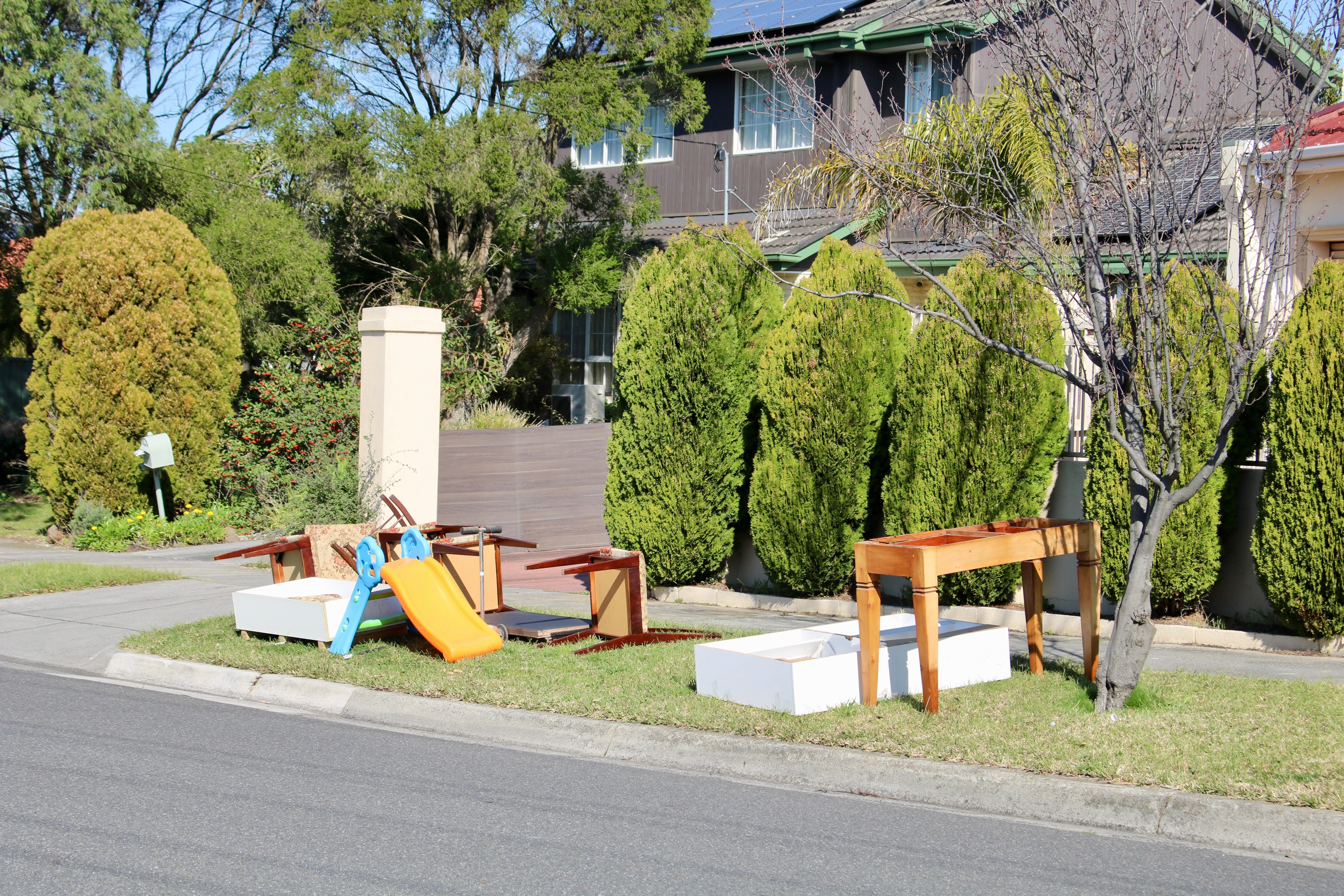
Photo: Izy Rajapakshe | Monash Herald
The change may also have an unintended benefit.
Rather than entire suburbs placing unwanted goods on nature strips within the same collection period creating kilometres of potential pickings for people searching for second-hand goods booked collections will spread hard waste across different properties and different weeks throughout the year.
It will not necessarily stop people taking something useful from the kerb, nor should reuse itself be regarded as the problem.
But for residents who spend time carefully preparing their hard waste only to wake up and find it pulled apart across the nature strip, the expectation is a simple one: if you find something worth taking, take it, just leave the rest as you found it.
For Monash, 2026 represents the final year of a hard waste tradition that has defined the municipality’s streets for years. From next year, the annual suburban clean-out will give way to something more individual, more flexible and, residents will hope, a little tidier.