

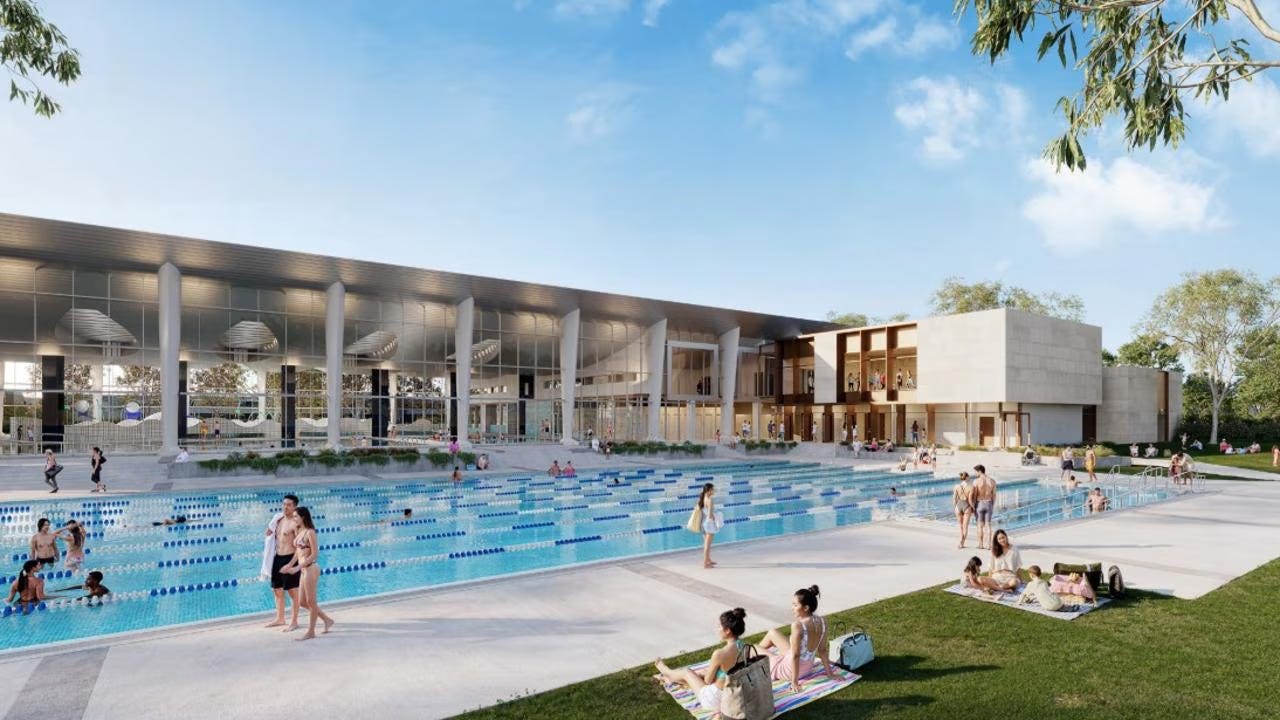
Artist impression, view across the existing 50m pool to the new east extension. Courtesy of City of Monash, Monash Aquatic Recreation Centre (MARC) Redevelopment, Council Agenda, 28 July 2026.
For years, the Monash Aquatic and Recreation Centre (MARC) has been caught between two competing realities.
It remains one of Monash’s busiest community facilities, attracting almost 748,000 visits in 2024-25. But the 25-year-old centre is increasingly struggling to cope with the demands placed upon it, with ageing pool systems and equipment, frequent shutdowns and facilities that no longer meet contemporary standards.
Monash Council now wants to spend $83.7 million to fix it.
The proposed redevelopment of the Waverley Road centre would replace much of its ageing infrastructure and significantly alter the facilities on offer, including the removal of the existing wave pool.
In its place would be a large zero-depth splash pad, aquatic play area, toddler pool and a new flexible program and learn-to-swim pool.
The change is one of the more consequential elements of a redevelopment that council officers describe as the “best value” option after years of feasibility studies and financial modelling.
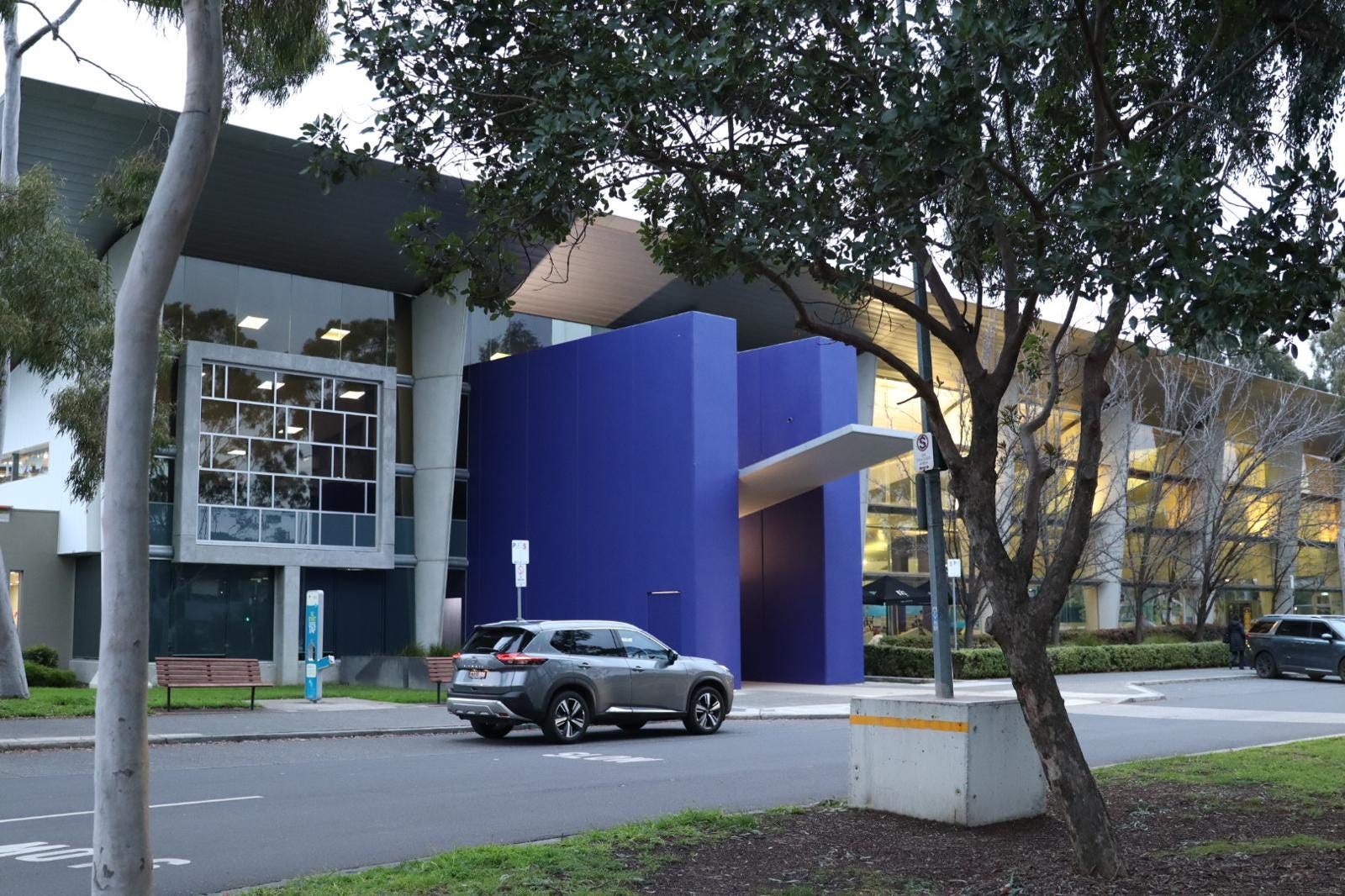
Photo: Izy Rajapakshe | Monash Herald
The council has considered a range of alternatives since councillors first called for a significant redevelopment in 2019. A full-scale redevelopment costing about $100 million was examined after the pandemic, while a more limited $40 million option would have concentrated on renewing ageing plant and equipment and making necessary accessibility improvements.
The cheaper option, however, offered little prospect of improving the centre’s financial performance.
The preferred $83.7 million proposal is intended to do more than repair what is broken. It is designed to increase the centre’s capacity and generate additional revenue.
The redevelopment would expand warm-water facilities, provide dedicated learn-to-swim and programmable space and enlarge the gym and fitness areas. It would also add outdoor change facilities and about 120 car spaces.
The centre would be fully electrified and fitted with 500-kilowatt solar panels.
Council documents identify the existing plant and circulation systems as being in a state of deterioration and say the renewal works are needed to reduce future maintenance and replacement costs.
The aquatic centre has experienced frequent shutdowns in recent years because of the age and condition of its assets. Council says the closures have affected revenue, customer satisfaction and confidence in the reliability of the centre.
There is a capacity problem as well.
Photo: Izy Rajapakshe | Monash Herald
An independent review found the centre had reached capacity, while its existing facilities were not sufficient to meet demand for learn-to-swim programs, warm-water pools, health and wellness services.
That problem is expected to become more acute as the population around the Suburban Rail Loop’s Clayton, Monash and Glen Waverley precincts grows.
Monash has also been given a state housing target of an additional 69,500 dwellings by 2051.
The council’s argument is that MARC needs to be rebuilt for the population it will serve in the future, rather than simply repaired for the population it serves today.
The financial case rests heavily on the new facilities attracting more users and reducing the cost of running the existing centre.
The independent aquatic services review found that planned and unplanned maintenance could be costing the centre up to $613,000 in lost revenue each year. It estimated that profitability could rise to $2.9 million after redevelopment.
The decision to remove the wave pool is also based on this financial modelling.
Council says replacing it with contemporary water-play facilities would produce a better benefit-cost ratio and return on investment than retaining the wave pool, while providing facilities more closely aligned with current community demand.
It is a pragmatic argument, but one that will inevitably test the attachment of existing users to a facility that has been part of the area for a quarter of a century.
There is another, less visible cost.
The redevelopment would require MARC to close for about two years, from June 2029 to June 2031, if the current timetable is maintained.
For a centre whose ageing infrastructure has already produced repeated interruptions, the irony is difficult to avoid: the solution to its unreliable operation will require the biggest interruption of all.
The financial commitment is also substantial.
Photo: Izy Rajapakshe | Monash Herald
Council has provisionally allocated $50 million in its long-term financial plan. The remaining $32.2 million funding gap could be met through state or federal government contributions, additional borrowing or land sales.
The proposal is not yet a final commitment to construction. The preliminary design is to be publicly exhibited, with community feedback to inform a final concept plan and business case before council considers the project again in 2027.
For Monash, the redevelopment represents a choice between continuing to maintain an ageing facility at increasing cost or making a substantial investment in a centre designed around the growth expected across the municipality.
The $83.7 million price tag makes the decision difficult to ignore.
So too does the two-year closure that will be required to deliver it.