

In August 2022, Monash Council took a step it knew would test the patience of its ratepayers. The long‑standing weekly red‑lid rubbish collection, a fixture of suburban life from Glen Waverley to Oakleigh, was cut back to a fortnightly service. In its place, the green‑lid food and garden waste bin moved to weekly pickup, a shift designed to divert thousands of tonnes of organic waste from landfill.
It was, by any measure, a jolt to household routines. The reaction was immediate.
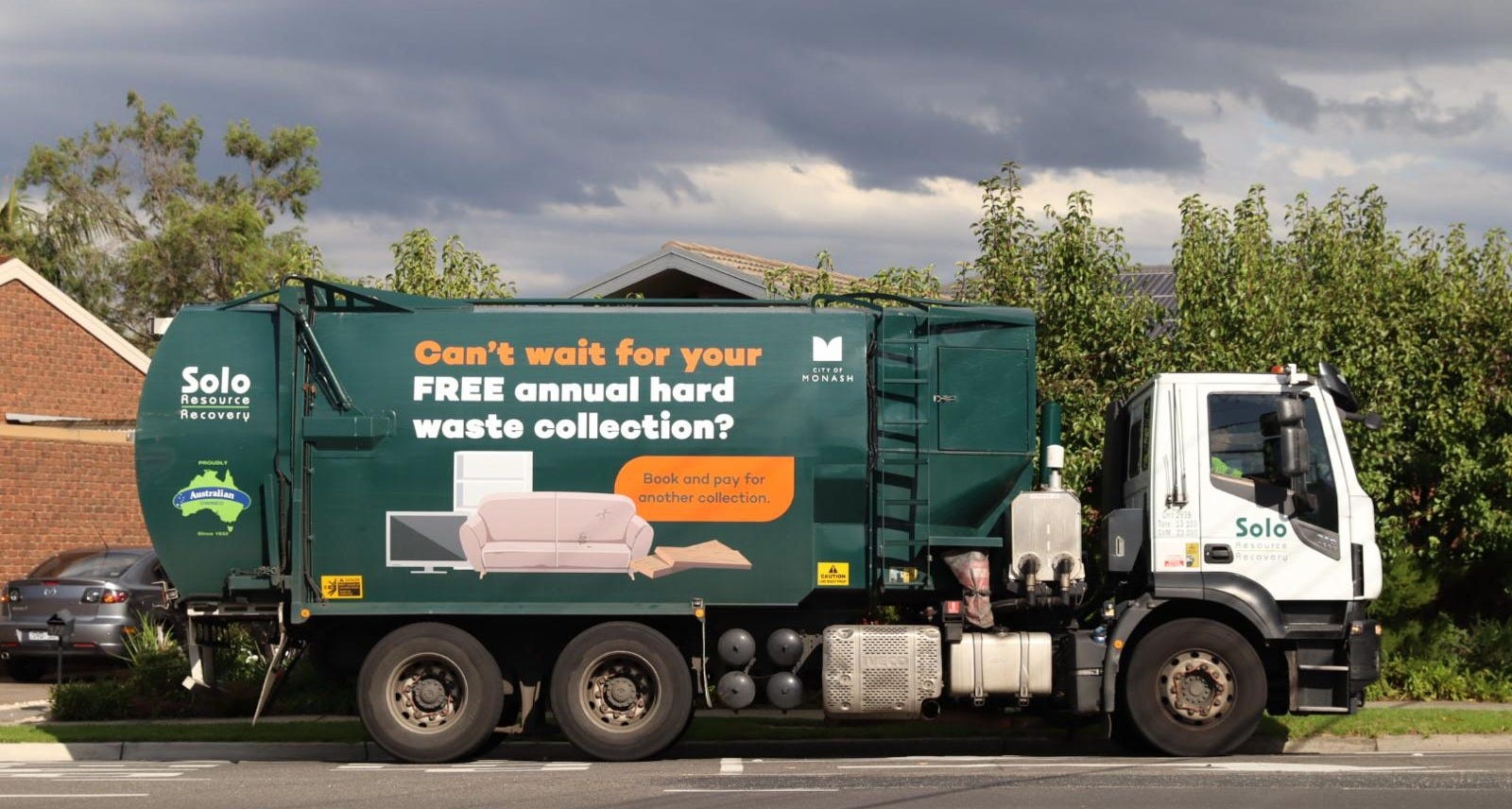
Photo: Izy Rajapakshe | Monash Herald
Petitions circulated through neighbourhood groups. Social media feeds filled with frustration. More than 4300 residents lodged submissions through Shape Monash, many warning of overflowing bins, summer odours and the practical difficulties of storing nappies and medical waste for two weeks at a time.
Council heard every one of those concerns. And then, in a rare move– it held its nerve.
The results have vindicated that resolve. In the first twelve months alone, Monash diverted more than 9,000 tonnes of material from landfill by channelling food and garden waste into composting, an outstanding outcome by any municipal benchmark. The diversion rate, which sat at 56.4% in 2020-21, has climbed steadily since. More households than ever are using their green bins correctly, and the volume of recyclable content recovered across the municipality has increased measurably since the frequency change took effect.
The statistics speak for themselves. Every tonne diverted from landfill is a tonne that avoids contributing to methane emissions, preserving what little tip capacity remains in Melbourne’s east and reduces the state government levies that ultimately find their way onto rates notices. With eastern region sites nearing capacity, Monash’s early shift has placed the municipality in a stronger position to avoid the costlier alternatives that await less proactive councils, including waste‑to‑energy processing or transporting rubbish across the city to the West.
Critically, the Council did not simply impose the change and walk away. It offered free bin upgrades to households with two or more children in nappies, residents with medical conditions generating additional waste, and families of six or more experiencing financial hardship. It reduced the cost of a second recycling bin to just $65 a year. It distributed sample packs of compostable liners and deployed education officers into neighbourhoods to help residents sort their waste properly.
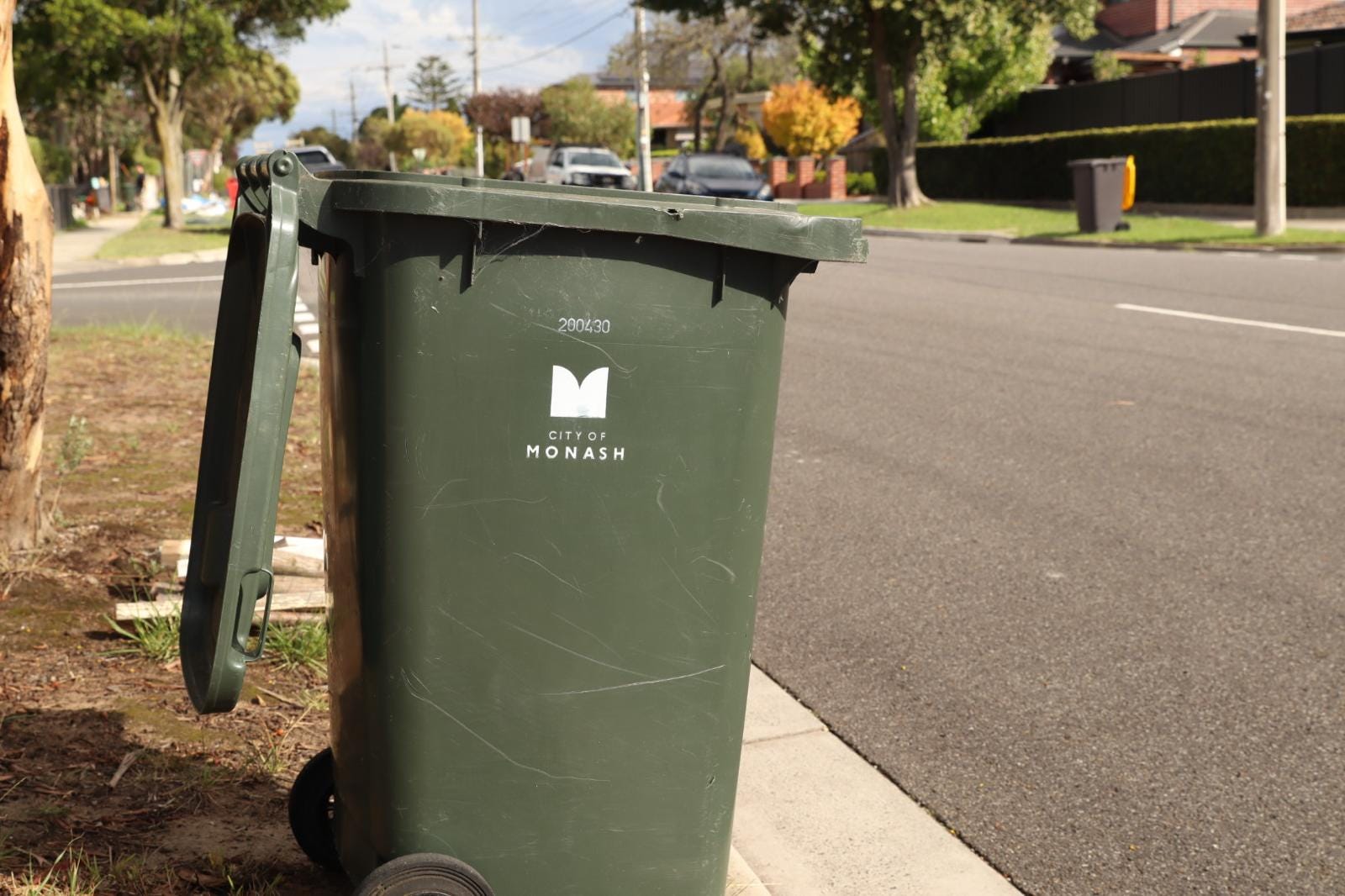
Photo: Izy Rajapakshe | Monash Herald
Inside the community’s reaction
Speak to residents across the municipality and you hear the full spectrum of experience, but what stands out is how many have embraced the new system once they adjusted.
One resident living in Monash since 2006, is part of a six-person household — exactly the kind of larger family critics predicted would struggle most. Yet the response is positive. “I like the bin collection,” the resident says. “I like the sorting of the bins — the cardboard and recycling.” For households willing to engage with the system as designed, separating waste streams properly means the red bin stretches further than sceptics expected.
Not everyone has found the transition straightforward. Jo, 32, has rented in the area for five years and shares her home with four family members. She says the yellow recycling bin has been easy enough to manage, but the fortnightly red‑lid collection remains difficult for a five‑person household. “It’s a bit more challenging,” she says. “With a large family we go through so much in a week, and the red bin fills up fast. We often end up storing extra rubbish at the back of the garage.”
Anthony, 20, is more direct. He preferred the old weekly system and says the fortnightly cycle is harder for his three-person household to manage. He views the change as a top-down decision — “a push down,” in his words — and is unconvinced there is a practical way around the tighter schedule.
These are legitimate perspectives, and Council has never pretended the change would suit every household equally. But it is worth noting that the support structures are there for those who need them. And as Jo’s experience illustrates, the yellow bin — the stream that handles the greatest volume of household packaging — is working effectively for residents who sort their waste correctly.
As for Anthony’s feeling that the policy was imposed from above, it is worth remembering that 4,300 residents participated in the consultation process, and that Council weighed that feedback carefully before proceeding. The decision was not taken lightly. It was taken because the environmental case was overwhelming and the long-term cost of inaction, both financial and ecological, was greater than the short-term inconvenience
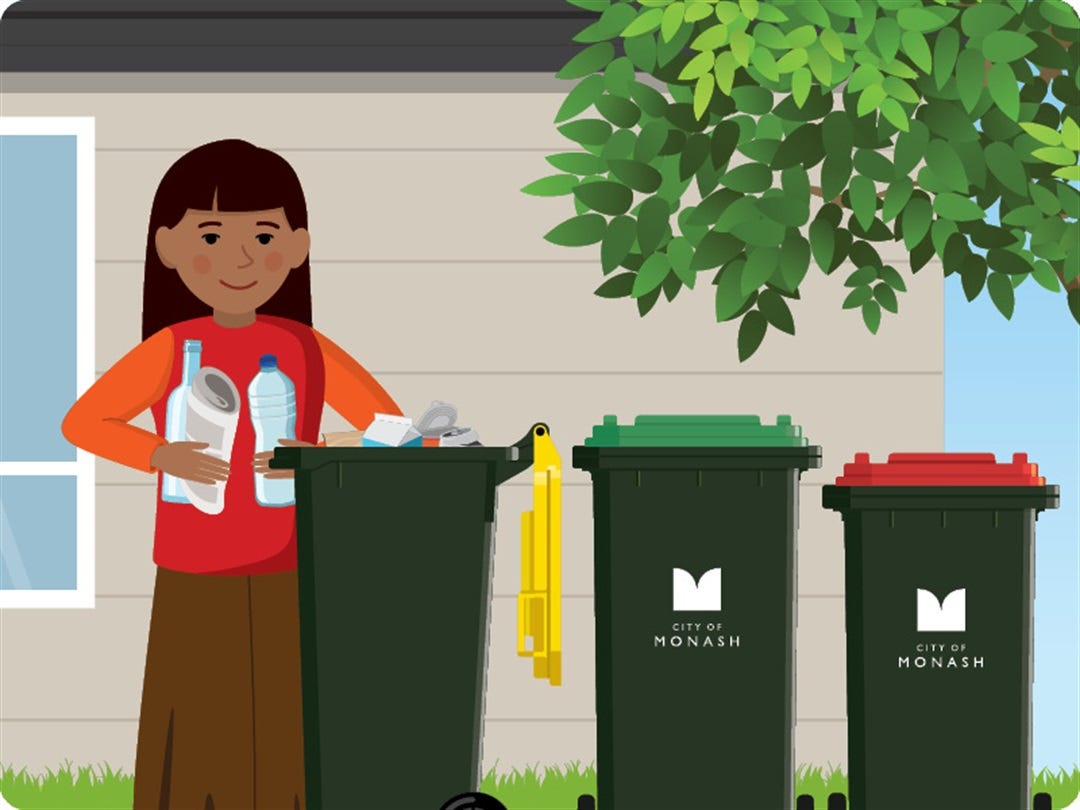
Photo: City of Monash | Bin Collections
The Purple Bin: The Mayor Speaks Up
Ask Monash Mayor Cr Stuart James what the biggest issue facing the municipality is right now, outside the well-worn debate over housing and planning reform, and his answer comes without hesitation.
“The biggest thing that’s happening for us outside of that at the moment is probably the fourth bin, or the glass recycling bin,” Cr James tells the Monash Herald.
The Victorian Government has mandated that all councils introduce a purple-lid glass recycling bin by 1 July 2027. Monash is one of 36 councils, roughly half the state, pushing back. But Cr James is not simply opposing the mandate for the sake of it. He is making an argument grounded in how the recycling landscape has shifted since the policy was first conceived.
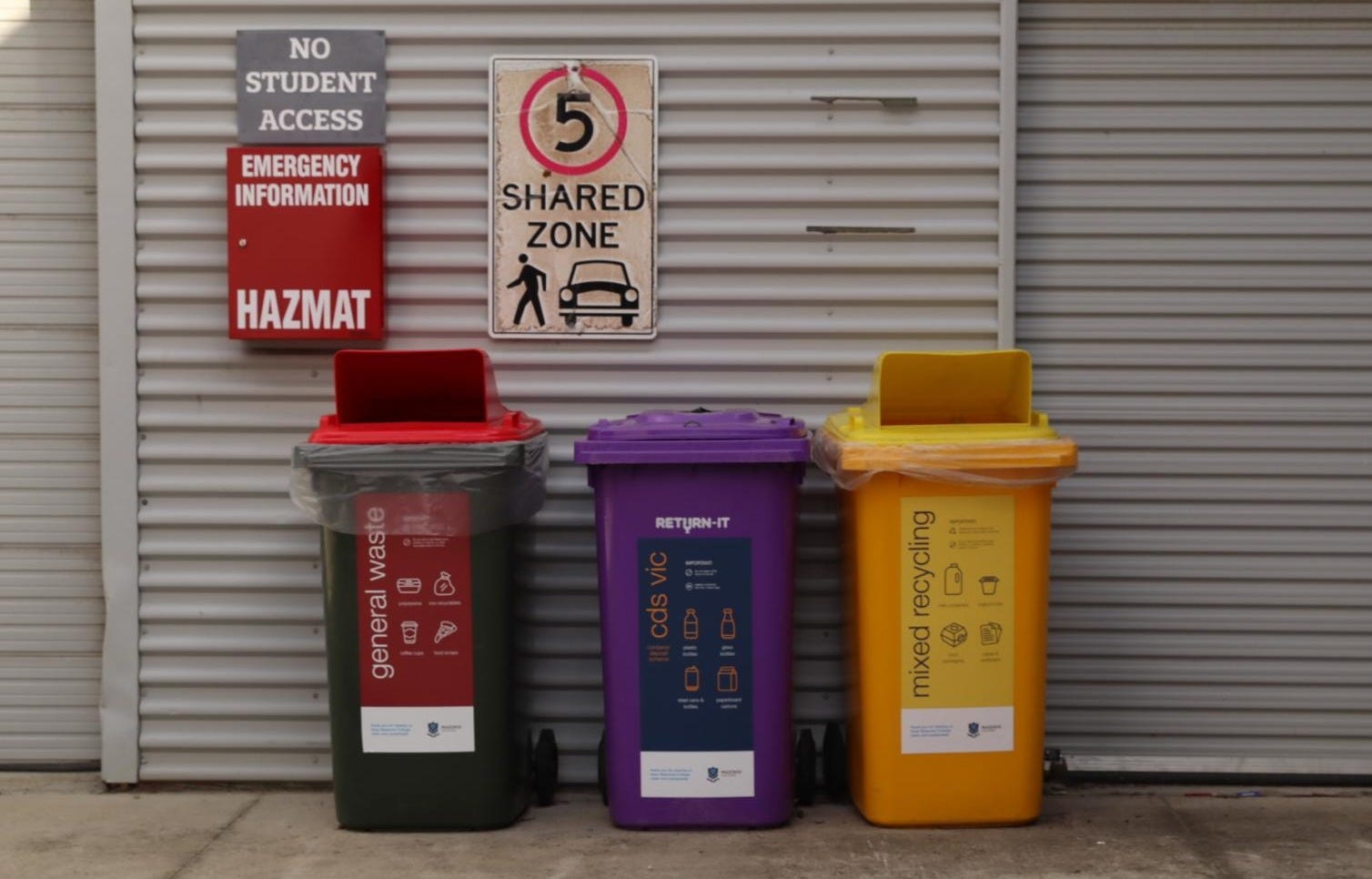
Location: Mazenod College, Mulgrave ( Unaffiliated Purple Bin Initiative) Photo: Izy Rajapakshe | Monash Herald
“We’re one of 36 councils ... that are saying to the government, well, no, you legislated this for a good reason in 2018 when China sort of stopped taking recycling,” Cr James explains. “You put that in place then. Since, you’ve introduced the container deposit scheme, and that has been outstanding.”
He is right about the scheme’s success. CDS Vic, launched in November 2023, has seen Victorians return more than 1.8 billion containers in its first twenty months. Over the 2025–26 Christmas and New Year period alone, nearly 62 million containers were returned — a record. The 10-cent refund has proven such a powerful incentive that it has changed behaviour at street level, in ways no one quite predicted.
“We now have residents going through other people’s bins to grab that stuff out and go and get the refund,” Cr James says. The point is serious: a market-driven mechanism is already diverting enormous volumes of glass and other containers out of the kerbside waste stream, without requiring an additional bin, an additional truck, or an additional collection schedule.
The Mayor argues the scheme should be expanded. “We argue that you should increase the container deposit scheme to include wine bottles and larger bottles,” he says — containers that are currently excluded from the CDS Vic refund but represent a significant share of household glass.
His second argument goes to the processing chain. Monash’s kerbside recycling is handled by Visy, one of Australia’s largest recyclers and a company Cr James is happy to single out by name. “Visy Recycling are really good, and they’re actually able to separate the glass from the other recycled material,” he says. “From the commingled bin.”
That capability is significant. Visy’s material recovery facilities use advanced optical sorting technology that can identify glass fragments as small as three millimetres, separating them from paper, cardboard, plastics and metals in the mixed yellow bin. Not all recycling providers can do this — and that, Cr James argues, is precisely where the state government’s legislative energy should be directed.
“There are other recycling providers that aren’t able to do that,” he says. “And our say is, as well as increasing this container deposit scheme, force those people that can’t separate the glass out — force them, or legislate for them to increase it so that they can separate it out.”
When pressed on whether his position is simply that councils should use recyclers who already have the technology, Cr James refines the point: “Force the recyclers to actually introduce the technology to separate it out would be the ideal one.”
The cost question sharpens the argument further. In Monash, implementing the purple glass bin would mean approximately $3 million in upfront implementation costs and $2 million in annual collection expenses — all to pick up a single material stream. The Mayor makes the point personal: “I’ve got three young children at home. We’re a family of five. Other than the old whiskey bottle every couple of months, I don’t have much glass at all.” He pauses. “So why are we spending $2 million a year to pick up something when we’ve got a container deposit scheme that can just be increased to take in those things?”
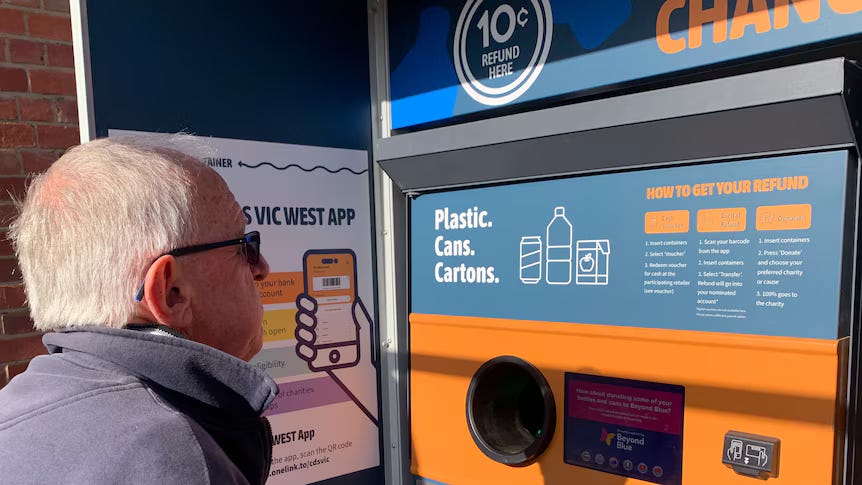
Photo: Andrew Keslo | Australian Broadcasting Corporation
It is a disarmingly practical question. And it is one the state government has, so far, declined to engage with.
Cr James is candid about the political reality. Thirty-six councils have made the same case. None have broken through. “It’s a great question,” he says when asked why the government would listen now. “I don’t have an answer for you because we just keep hitting brick walls.”
But the Mayor frames his persistence as a matter of principle — and political maturity. “Sometimes you need to look at things and go, we did this with the best of intent,” he says. “Times have changed, we’ve moved on, we’re now in these different settings. I’m happy to go back and review that and say, well, now that times have changed, I’m happy to review my decision and change.”
It is a direct challenge to Spring Street: not to abandon glass recycling, but to have the intellectual honesty to acknowledge that a policy designed for 2018’s crisis may no longer be the most viable solution in 2026’s reality.
Leading, Not Following
It is worth remembering where Monash sits in this landscape. While some Victorian councils are only now grappling with food and garden waste collection, Monash introduced its green bin service back in July 2020 and expanded it to weekly pickup two years later. The municipality has consistently been ahead of the curve — not because it enjoys disrupting residents’ routines, but because it takes its environmental responsibilities seriously.
The fortnightly garbage collection was never about taking something away from ratepayers. It was about redirecting resources toward a system that works better for everyone — residents, the environment and future generations who will inherit whatever we leave behind. The 9,000 tonnes diverted from landfill each year is not merely a line in a council report. It is cleaner air, slower tip fill, lower long-term costs and a community that can honestly say it is doing its part.
Residents like Anthony may feel the squeeze of the fortnightly cycle, and renters like Jo may wish the red bin were larger. Council should — and demonstrably does — keep listening. But the trajectory is clear: where Monash has led, results have followed. The household that sorts well, composts its scraps and returns its bottles to a CDS Vic refund point will not just cope with the new system. It will thrive in it.
On the purple bin, Cr James is asking the right question — not whether glass should be recycled better, but whether a mandatory fourth bin is the smartest way to achieve it when proven alternatives already exist. He is not grandstanding nor refusing to engage. He is offering an evidence-based counter-proposal and asking the state government to do something that too few politicians are willing to do: revisit a decision in light of changed circumstances.
Monash has earned that credibility with four years of results. Spring Street would be wise to listen.