

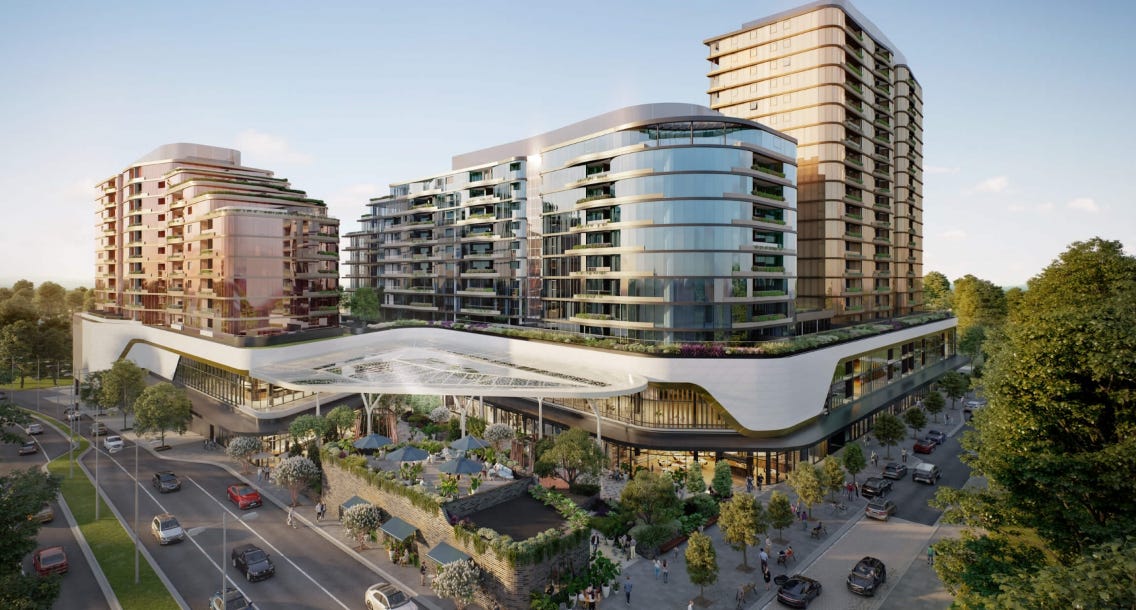
Glen Waverley has not traditionally been a suburb associated with rapid reinvention. Its appeal has long been tied to stability: established schools, a consistent retail centre, and a dining precinct along Kingsway that has become a well‑known feature of suburban Melbourne.
In a growing city, however, such constancy is often a temporary condition.
What is now unfolding is not a sudden rupture, but a staged transformation that is already underway and will continue well into the next decade.
At the centre of this shift is the Suburban Rail Loop (SRL), a project whose significance lies less in its engineering than in the way it reorders the geography of the city. In Glen Waverley, early works and planning are already progressing, with major construction expected to accelerate over the next few years. The new underground station forms part of the SRL East section, which is currently slated for completion around 2035.
Once operational, the line will provide direct connections from Glen Waverley to Monash, Clayton and Box Hill within minutes, reshaping the suburb’s position within Melbourne’s transport network. Such shifts in accessibility are a key driver of urban change, altering patterns of movement and redefining proximity.
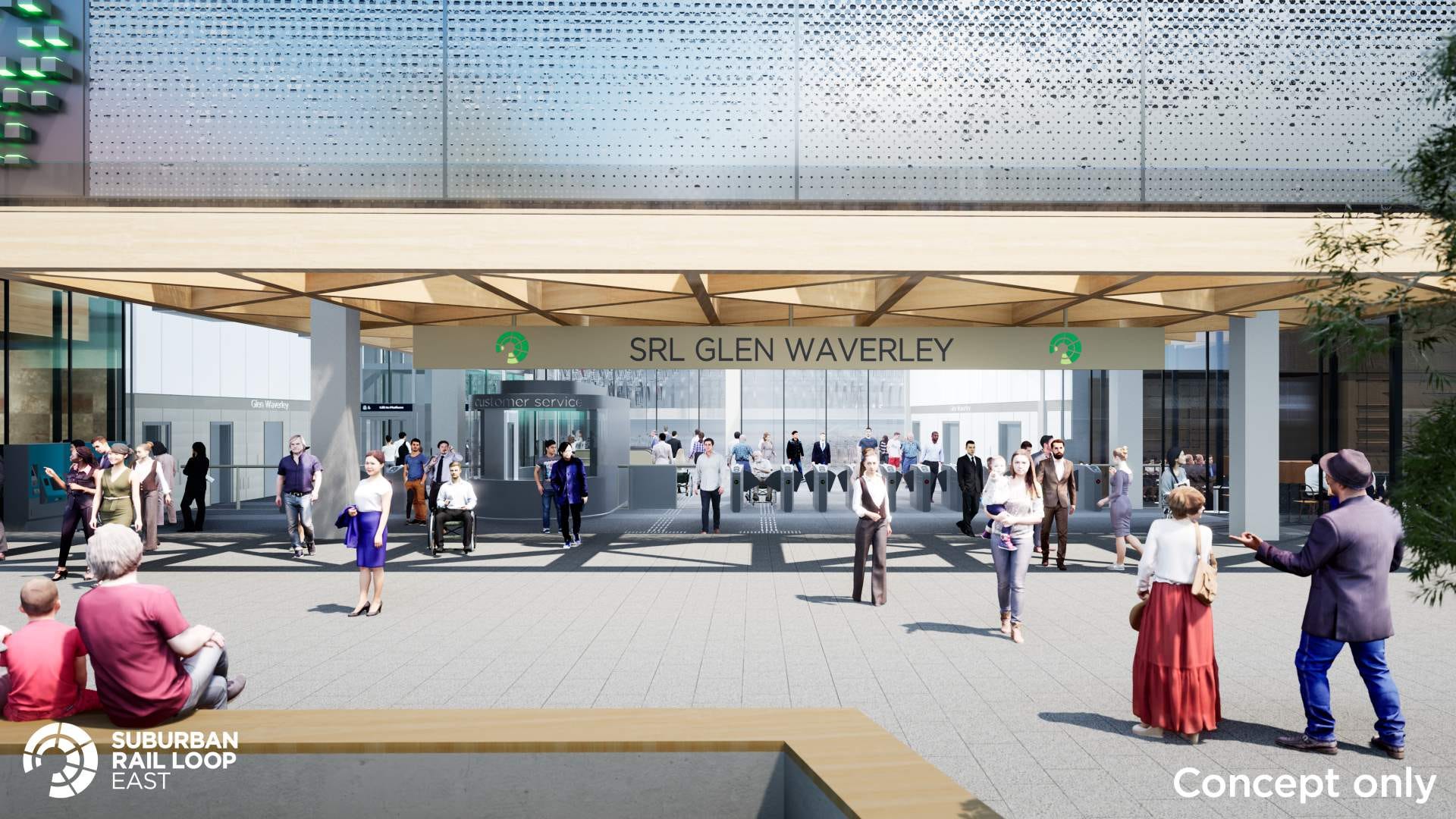
Some of the effects are already visible. Planning controls around the future station have been revised, with the state government designating Glen Waverley as a priority “activity centre”. This designation brings a substantial increase in permissible building heights and residential densities within walking distance of the station.
One of the most prominent developments reflecting this shift is a major project on Springvale Road, approved at more than $400 million, which will deliver two towers rising to approximately 30 and 35 storeys, alongside nearly 800 apartments and ground-floor retail. Construction is expected to commence within the next one to two years, with completion likely toward the late 2020s.
This is not an isolated case. A pipeline of mid- and high-rise proposals is emerging across the precinct, many expected to be delivered progressively between 2026 and the early 2030s, reshaping the skyline and increasing the local population. To describe this as intensification is accurate, but incomplete. What is being proposed is not merely more housing, but a different model of suburbia altogether.
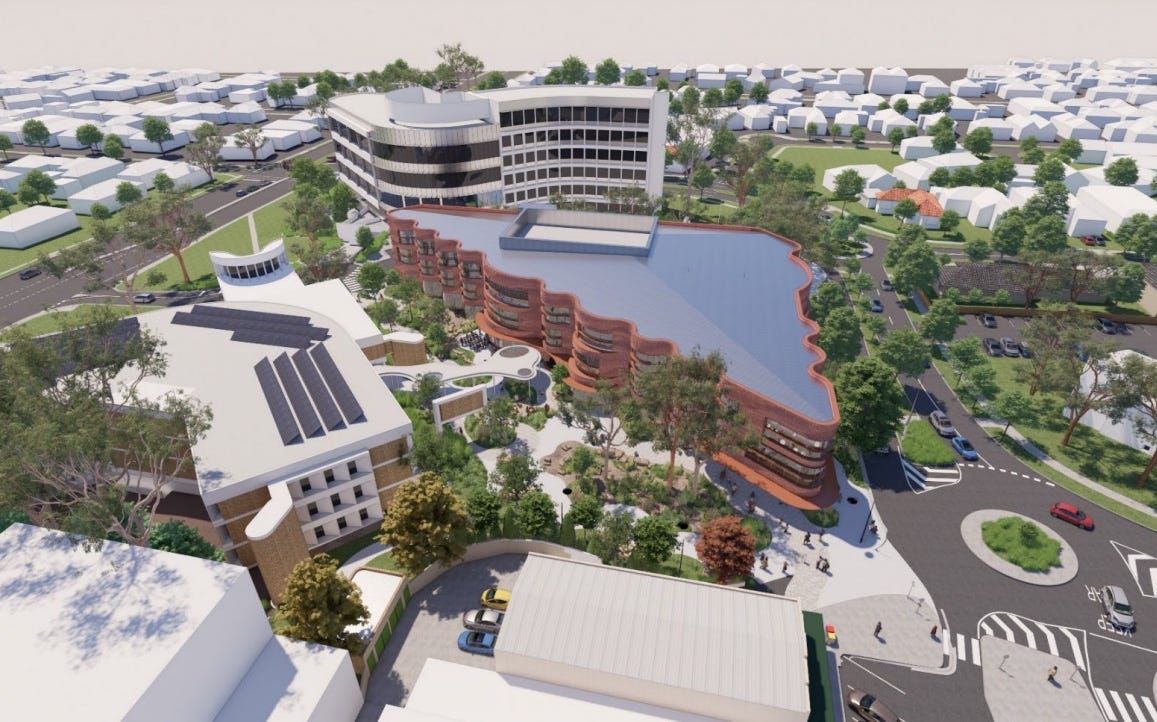
Parallel to private development, public investment is quietly reshaping the civic landscape. The Glen Waverley Civic Precinct project, a council-led redevelopment near Kingsway, is already underway, with staged construction expected to continue through 2026–2028. The project will deliver a new library, upgraded community facilities and revitalised public spaces designed to support a growing population. Such projects rarely attract the same attention as high-rise towers, but they often prove more enduring in how they shape daily life.
On Kingsway, the changes are more subtle but no less significant. The strip remains crowded most evenings, its restaurants continuing to draw patrons from across Melbourne’s southeast. Yet even here, the context is shifting. Increased residential density is gradually altering the demographic mix, while ongoing upgrades to The Glen shopping centre and surrounding sites are expected to continue incrementally over the coming decade.
Taken together, these developments point to a clear timeline of change:
Now–2026: Planning reforms, early works for SRL, civic precinct construction begins
2026–2030: Major apartment developments delivered, skyline begins to shift
2030–2035: SRL station completion, full transition to a high-density activity centre
Such transitions are rarely without tension. Concerns about congestion, infrastructure capacity and neighbourhood character have accompanied the first wave of proposals. These are not new objections, nor are they easily dismissed. They reflect a deeper uncertainty about how much change a place can absorb before it becomes something else entirely.
Yet to resist change outright is to overlook the forces that are driving it.
Infrastructure investment of this scale anticipates and directs growth. The SRL, in this sense, is both a transport project and a planning instrument, one that compels surrounding suburbs to evolve in tandem. Glen Waverley, by virtue of its location, has become one of its clearest test cases.
For now, the suburb occupies an in-between state, no longer quite what it was, but not yet what it is intended to become. Its shift reflects a broader metropolitan trend, as Melbourne adapts to patterns of expansion that extend both outward and upward.